MutfağımızOur kitchen
Közde Kanat: Odun Ateşi Lezzeti Nasıl Değiştirir?Ember-Grilled Wings: What Wood Fire Brings to the Flavour
Kanadı yağda kızartmak mümkün, ama biz odun közünü seçtik. Bu yazıda közün kanada ne yaptığını, kızartmadan farkını ve sos seçimini anlatıyoruz.You can deep-fry a wing, but we chose wood embers. Here's what embers do to a wing, how it differs from frying, and how to pick your sauce.
Köz ile alev aynı şey değil
Odun yakıldığında önce yüksek alev çıkar. Alev kanadı dışından hızla yakar ama içini pişirmeye fırsat vermez. Biz alevin inmesini ve odunun kızıl köze dönmesini bekleriz. Köz, daha dengeli ve yayılan bir ısı verir; kanat içten pişerken dışı yavaş yavaş kızarır.
Neden odun ateşi?
Kanadın yağı köze damladığında kısa bir duman yükselir ve bu duman eti sarar. Közde pişen kanatlardaki o hafif is kokusu buradan gelir. Gazlı ızgarada ya da fritözde bu aromayı elde etmek zordur.
- Kenarlar hafifçe kararır, içi suyunu korur.
- Is kokusu sosun altında bile hissedilir.
- Siparişle pişer; kanat önceden pişirilip bekletilmez.
Kızartmadan farkı
Kızartma kanat genellikle una ya da galeta karışımına bulanır ve kızgın yağda pişer; dışı çıtır ve kaplamalıdır. Közde kanat ise kaplamasızdır: dokusunu kömürleşen derisinden, lezzetini marine ve dumandan alır. Menümüzde çıtır kanat da var; o kaplamalı ve kızartılarak hazırlanıyor. İkisi farklı tabaklar, karıştırmamak gerek.
Buffalo mu barbekü mü?
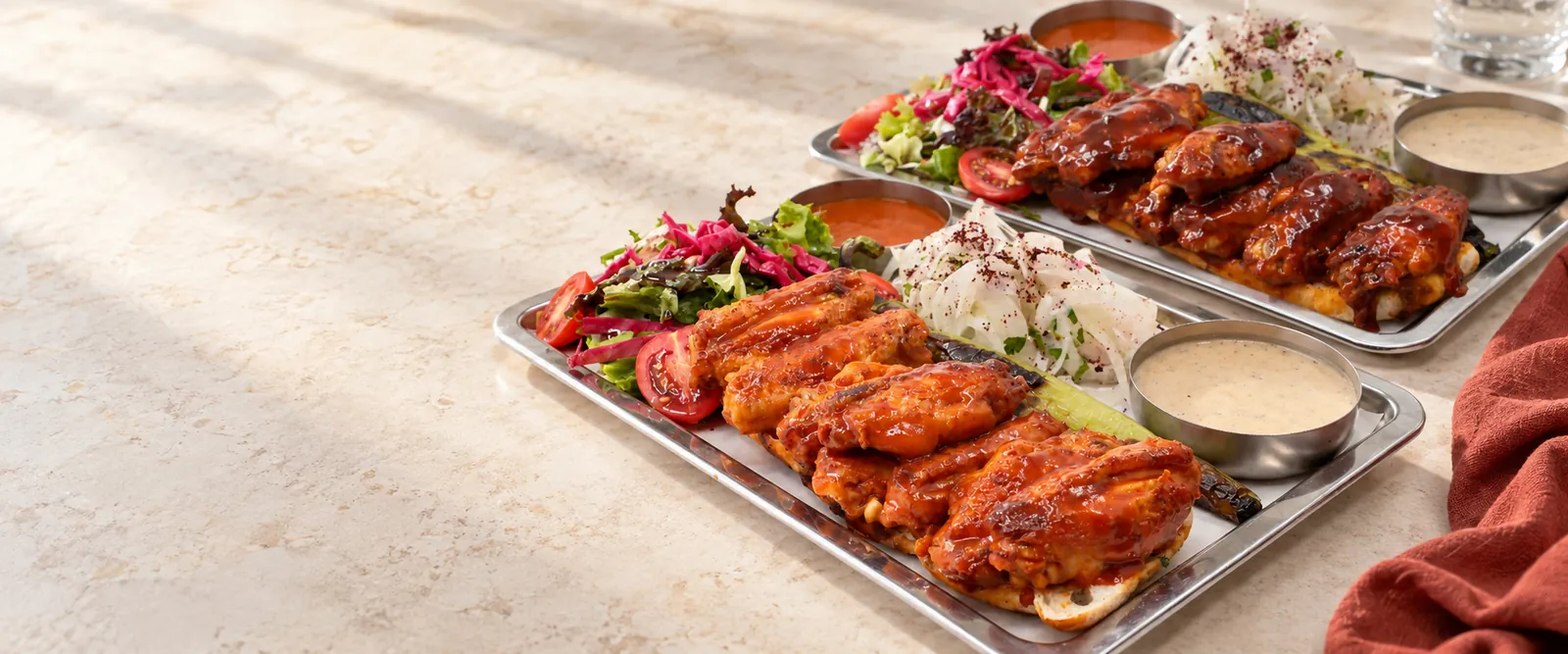
Buffalo sosu turuncu, ekşimsi ve acıdır; klasik tarifinde acı biber sosu ile tereyağı bulunur. Közün dumanıyla birleşince keskin ve iştah açıcı bir tat verir. Barbekü sosu ise koyu, parlak, tatlı ve fümedir; acıdan çok lezzet arayanlar içindir.
Sos istemeyenler için acılı ve acısız kanatlar baharatla pişer. Közün tadını en yalın haliyle almak istiyorsan bunlardan başla. Hangisinin sana göre olduğuna karar veremiyorsan sos seçicimize bak ya da doğrudan menüye geç.
Embers are not flames
When wood is lit, it first throws up tall flames. A flame scorches a wing from the outside before the inside has a chance to cook. So we wait for the flames to die down and the wood to turn into glowing embers. Embers give a steadier, radiant heat: the wing cooks through while the outside slowly browns.
Why a wood fire?
When fat from the wing drips onto the embers, a brief puff of smoke rises and wraps around the meat. That gentle smoky aroma in ember-grilled wings comes from there, and it's hard to get the same thing on a gas grill or in a fryer.
- The edges char a little and the inside stays juicy.
- The smoke comes through even under the sauce.
- Cooked to order; wings aren't pre-cooked and kept warm.
How it differs from frying
Fried wings are usually dredged in flour or breadcrumbs and cooked in hot oil, so they come out crunchy and coated. Ember-grilled wings have no coating: the texture comes from the charred skin, the flavour from the marinade and the smoke. We also serve crispy wings, which are coated and fried. They're different dishes, so don't mix them up.
Buffalo or BBQ?
Buffalo sauce is orange, tangy and hot; the classic recipe is hot pepper sauce and butter. With the smoke from the embers it's sharp and moreish. BBQ sauce is dark, glossy, sweet and smoky, for those who want flavour over heat.
If you'd rather skip the sauce, our spicy and mild wings are cooked with a spice rub, the purest way to taste the embers. Can't decide? Try our sauce picker or go straight to the menu.